

This post may contain affiliate links. Learn more.
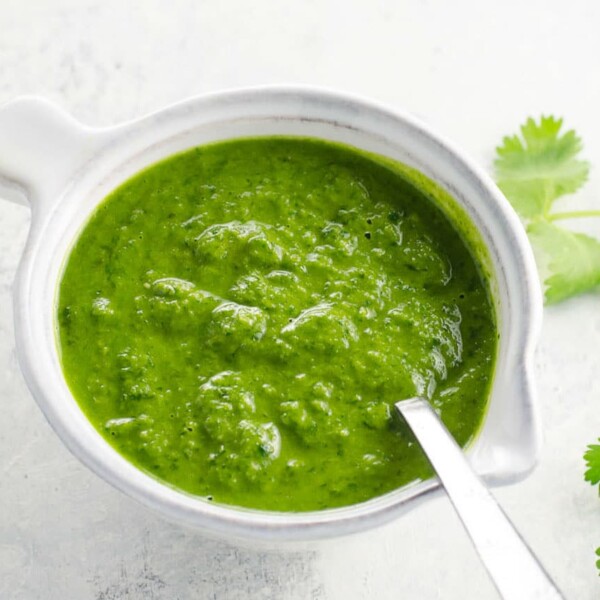
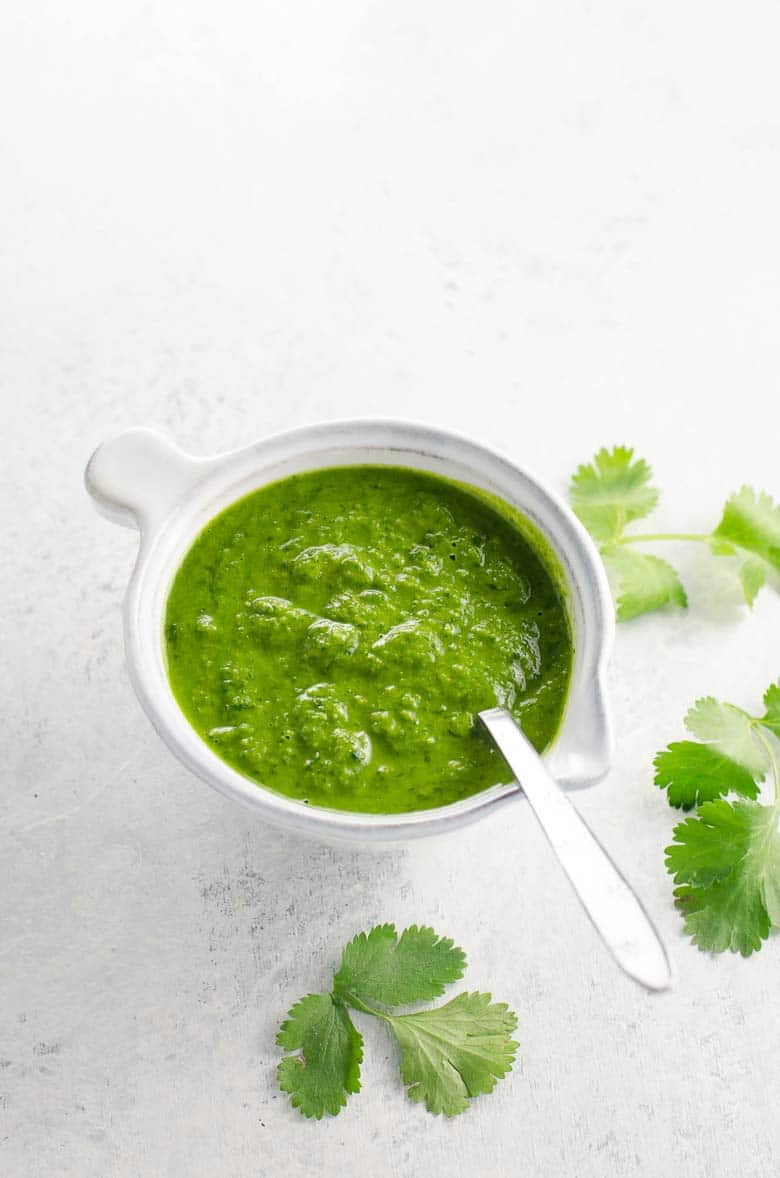
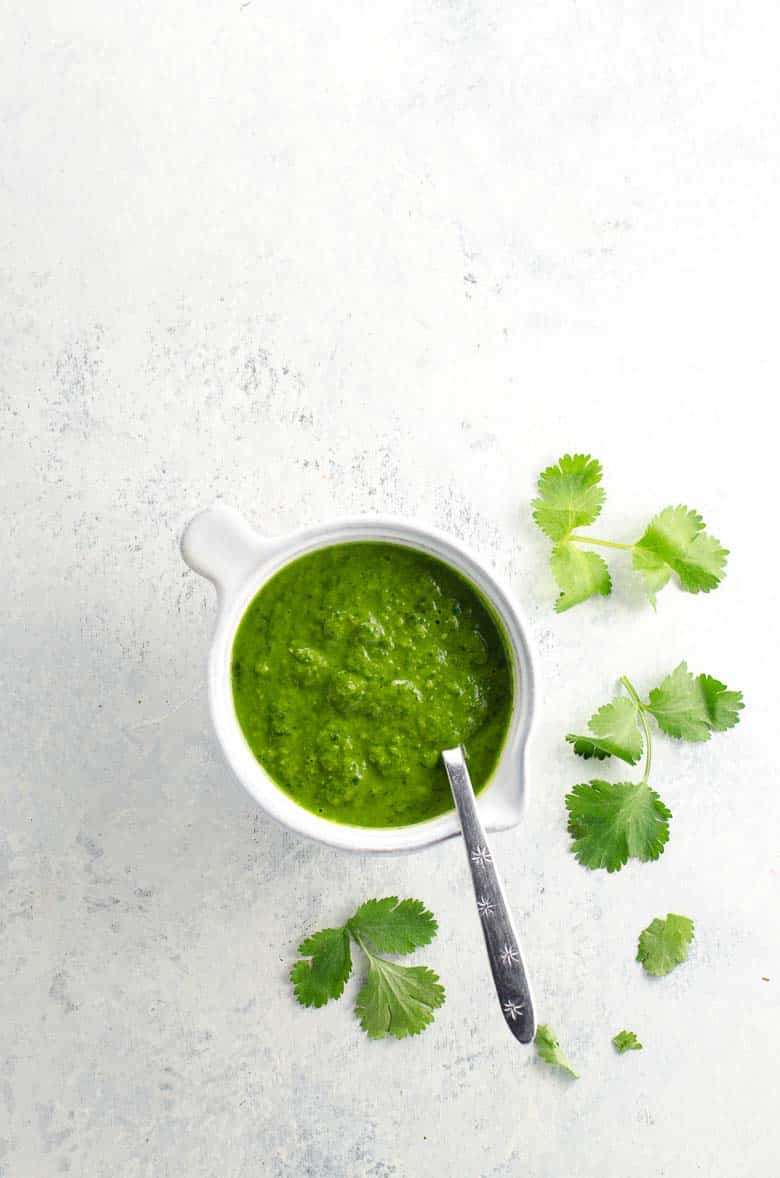
We make this cilantro sauce recipe on a seriously regular basis. You’ll find it drizzled over many of our recipes, from tacos to quesadillas to nachos.
Why we love this recipe (and so many of you do, too)
This sauce is basically magic. As long as you’re not a cilantro hater, I practically guarantee that you’ll love it. It’s a fabulous, healthy, and easy way to jazz up Mexican-inspired food as a no-brainer. (See below for a nice long list of perfectly appropriate uses in that realm.)
But it’s also a great way to jazz up a wide variety of meals you may not think of right off the bat. I’ve been known to use it to dip pizza crust in, as a salad dressing, to add an extra layer of flavor to burgers, to turn a batch of simple lentils and rice into a memorable meal, and much more.
What you’ll need
Here’s a glance at the ingredients you’ll need to make this recipe.
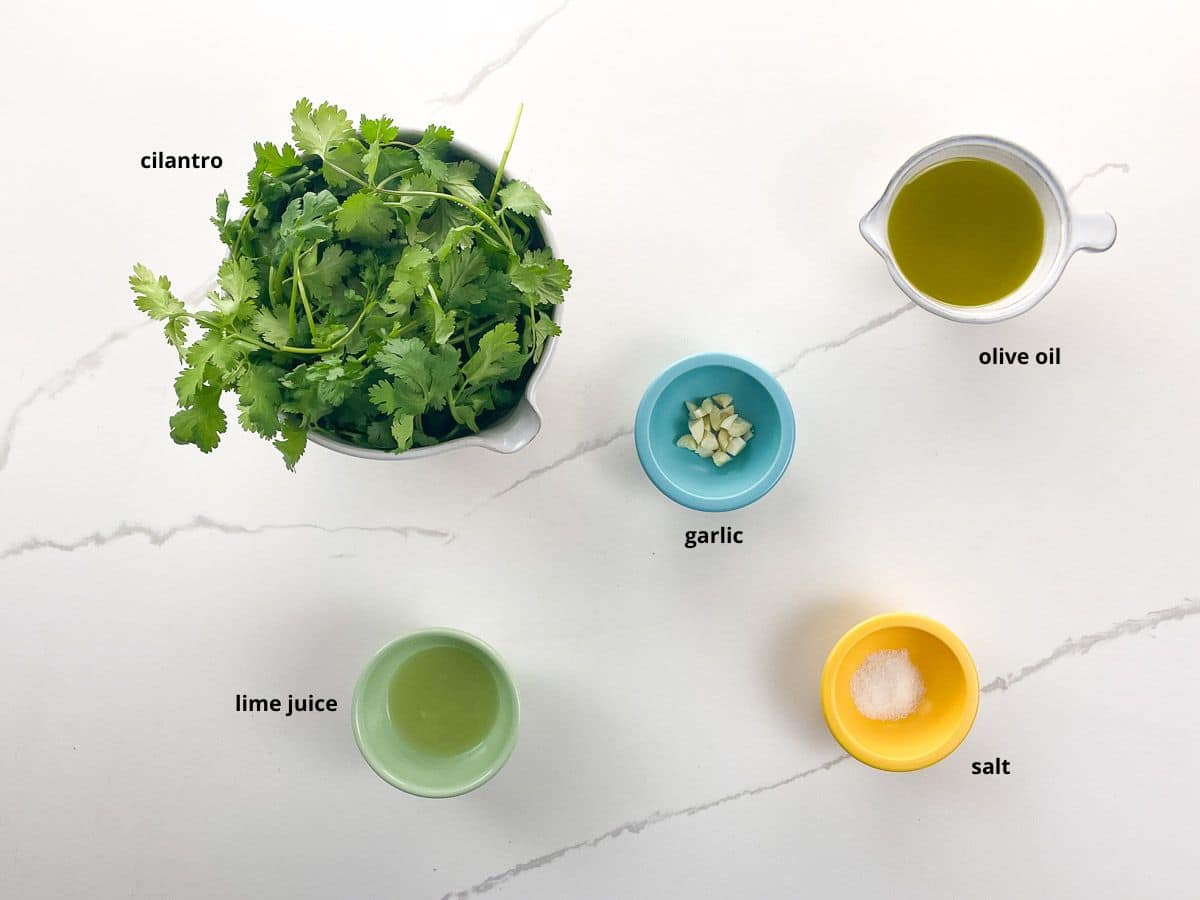
- A reasonable extra-virgin olive oil from the supermarket is a good choice. The flavor will definitely come through, so choose something that you like. But there’s no need to tote out your fancy unfiltered versions with the perfect level of astringency.
- Plenty of freshly squeezed lime juice and fine sea salt work in tandem to create just the right balance of flavors. (That said, salt preferences vary a lot from person to person, so if you’re sensitive to salt, you can start with less and adjust as you go.)
- Fresh garlic is essential to bring together the flavors. You can vary the amount to suit your preference.
- The recipe calls for a generous amount of cilantro. Some varieties have a fairly aggressive flavor while others are positively mellow, so taste yours before buying if possible, and make sure you like its specific flavor profile. You’ll use both the leaves and stems in this recipe.
How to make it
Here’s an overview of what you’ll do to make a dreamy batch of cilantro sauce. You can see the steps in action in the video that accompanies this post, and get all the details in the recipe card below.
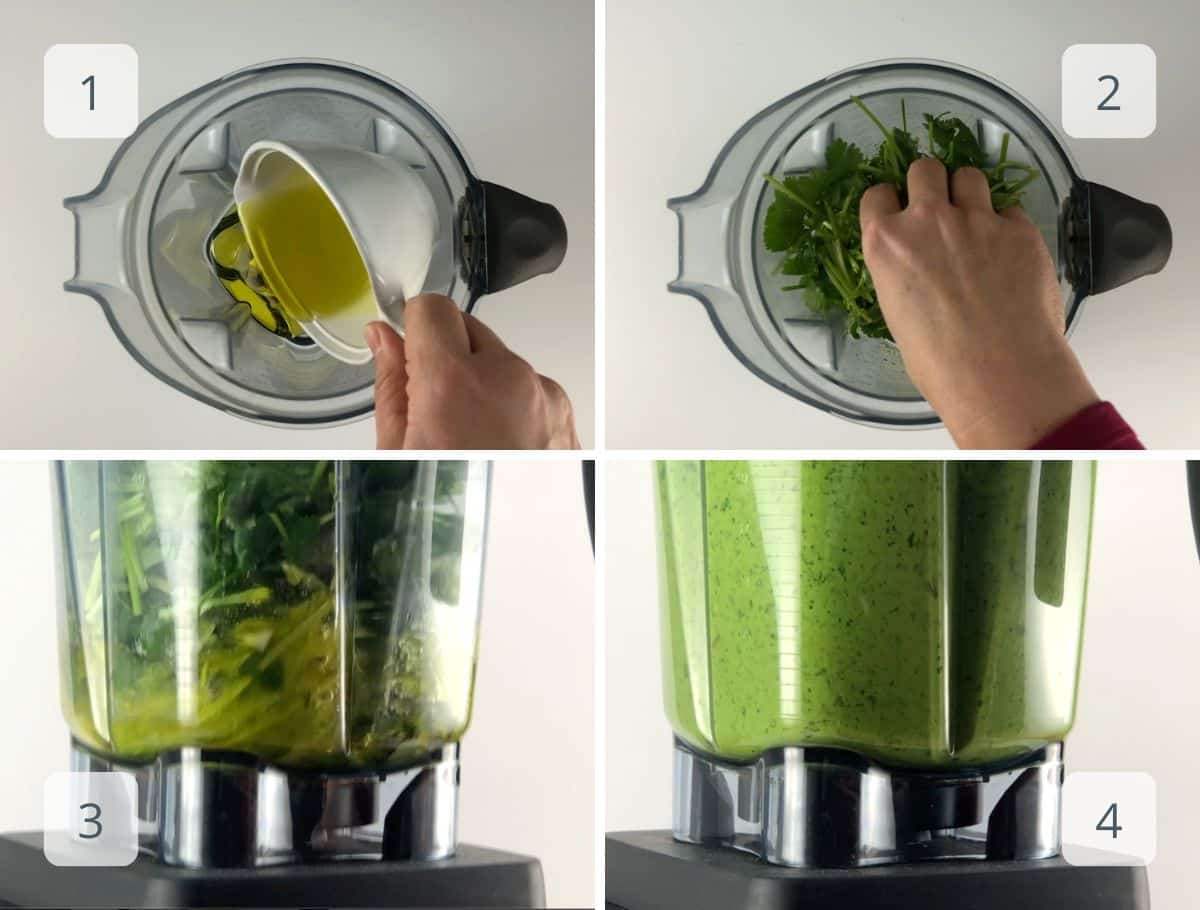
- Set up a blender or food processor and add the olive oil and lime juice first.
- Then add the garlic, salt, and roughly chopped cilantro.
- Blitz it to your desired consistency. I like it pretty well blended, but you can keep it more roughly blended if you prefer.
- Taste for salt and lime juice and add more if you like. That’s it!
Expert tips and FAQs
Yes. Lots of readers have frozen it in ice cube trays, then transferred to an airtight container, and kept in the freezer for up to a year. That way you can defrost it in small portions if you like.
Yes. If you keep cilantro sauce tightly sealed in a jar in a nice cold fridge, it’ll last for up to a week. The flavor will mellow a bit, but the generous amount of lime juice will prevent the cilantro from oxidizing too much. I sometimes like to store it with a thin layer of additional olive oil on top to create a seal.
This means it’s great to keep a batch on hand (along with a batch of pickled red onions) at basically all times (give or take!) to help keep basic weeknight dinners interesting.
What to serve with cilantro sauce
The sky’s the limit here, really. We’ve been known to drizzle this stuff on burgers, roast chicken, and leftover pizza and use it as a salad dressing. But here are a few of our top suggestions for what to serve with cilantro sauce:
- Vegetarian black or pinto bean tacos
- Garlic shrimp tacos
- Crispy potato tacos
- Ground pork tacos
- Carne asada tacos
- Refried bean quesadillas
- Shrimp and spinach quesadillas
- Nachos
- Totchos
- Enchiladas
- Taco bowls
- Halloumi, broccolini, and lentil dinner bowls
Love sauces with fresh herbs?
You might also really like our chimichurri recipe.
Summarize & Save This Content On
Cilantro Sauce Recipe
Ingredients
- ⅓ cup (78 ml) extra-virgin olive oil
- Juice of one lime, 2 to 3 tablespoons
- 1 medium garlic clove, roughly chopped
- ¾ teaspoon fine sea salt
- 1 large bunch cilantro, about 4 ounces/114 grams, washed well, including stems
Instructions
- Roughly chop cilantro. Combine all ingredients in a blender and blend until smooth, stopping to push cilantro down into the blades as necessary.
Notes
- A reasonable extra-virgin olive oil from the supermarket is a good choice. The flavor will definitely come through, so choose something that you like. But there's no need to tote out your fancy unfiltered versions with the perfect level of astringency.
- Plenty of freshly squeezed lime juice and fine sea salt work in tandem to create just the right balance of flavors. (That said, salt preferences vary a lot from person to person, so if you're sensitive to salt, you can start with less and adjust as you go.)
- Fresh garlic is essential to bring together the flavors. You can vary the amount to suit your preference.
- The recipe calls for a generous amount of cilantro. Some varieties have a fairly aggressive flavor while others are positively mellow, so taste yours before buying if possible, and make sure you like its specific flavor profile. You'll use both the leaves and stems in this recipe.
- Store cilantro sauce in a tightly sealed jar in a nice cold fridge for up to a week. The flavor will mellow a bit, but the generous amount of lime juice will prevent the cilantro from oxidizing too much. I sometimes like to store it with a thin layer of additional olive oil on top to create a seal.
- Or freeze it in ice cube trays, then transfer to an airtight container, and keep in the freezer for up to a year. That way you can defrost it in small portions if you like.
Nutrition
Nutrition information is automatically calculated, so should only be used as an approximation.
P.S. Here’s the quirky (and charming?) original text to this post from years ago.
Cilantro sauce is basically magic
This green stuff is cilantro sauce. And though my main point here is that cilantro sauce is appropriate just about any time and place, drizzled over or guzzled from just about anything, the green stuff is also an anachronism.
That’s because the original home of cilantro sauce is atop black bean tacos, and I wrote about black bean tacos six months ago. Without cilantro sauce, for whatever reason.
But now, if you look closely at the tacos recipe, you’ll see a link to this post for cilantro sauce. As if it had been there all along. As if maybe you just didn’t notice it until now.
To be honest, it’s a little bit of both. Whadda you say we drizzle it with cilantro sauce and call it a day?
Anachronism, what now?
P.S. I know you’re all smarter than average. Obviously. But just in case you were one of the people who, let’s say, stepped out for a minute to look up the definition of anachronism and then came back, I just want to say this to you.
Thanks for coming back. Your follow-through — your “sticktoitiveness,” as my dad would have said — will get you way further in this world than an A-minus vocabulary.
Also, just so you know we’re all in this together: Last week, at age 35, I suddenly realized that when people say “let’s leave well enough alone,” it’s something already done well enough that they’re agreeing to leave alone. Because, you know, it’s already done well enough. Just like everyone’s been saying, out loud, for my whole life.
Before that, I just thought people had all agreed to use a weird way of saying, “Let’s leave that alone.” So. See? We’re all in this together.








Any reason why it would come out bitter? The cilantro sat in my fridge for 3 days and got a little wilted and my limes had a few age spots (no mold). I’ve made this before and it was just very strong lime, but this time it’s a bitter that irritates the back of my throat so I know I did something wrong.
Hi Roxanne, I don’t think you did anything wrong! If you’ve made it before and liked it, my guess is that the cilantro was especially bitter. It’s been SUCH a hot summer, and cilantro is really a cooler-weather plant, so it’s possible it was just too strained to have optimal flavor. Another possibility (though I don’t think this is the case, since you’ve made it before) is that you’re especially sensitive to the bitter compounds in extra-virgin olive oil, which do get more pronounced when you blend them. This isn’t something that would bother most people, but a small percentage of people really notice it.